
How Do I Trust God When I’m Afraid? Overcoming the Lies of Fear.
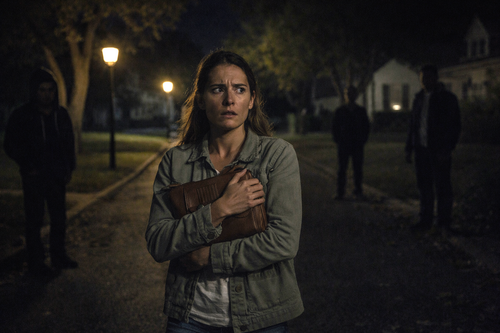
Fear has a way of showing up uninvited.
Sometimes it’s lou a diagnosis, a financial setback, a difficult conversation or a walk alone down a dark street.
It's also sometimes quiet, a lingering anxiety about your children, your future, your calling, or something you can’t quite name.
You believe in God. You know Scripture. You’ve seen His faithfulness before.
And yet… fear still rises.
So how do you trust God when you’re afraid?
The Bible does not dismiss fear. It addresses it honestly and it shows us how to walk through it.
1. Fear Is Human, But It Doesn’t Have to Lead
Even strong believers experience fear. David did. Elijah did. The disciples did.
David wrote:
Notice what he didn’t say. He didn’t say, “I never get afraid.” He said, “When I am afraid.”
Fear is a natural human response to uncertainty or threat. It becomes spiritually dangerous only when it becomes the loudest voice in our lives.
Trust is not the absence of fear. Trust is choosing God while fear is present.
2. Trust Begins With Who God Is, Not What You Feel
Fear magnifies the problem. Trust magnifies God.
Proverbs reminds us:
When we lean on our own understanding, we attempt to calculate every outcome. We replay scenarios. We try to anticipate worst-case possibilities.
But trust shifts our weight from our limited perspective to God’s eternal perspective.
When fear rises, ask:
The character of God is the anchor of trust.
3. Fear Often Grows From Uncertainty and Loss of Control
Most fear is rooted in what we cannot control.
Worry attempts to live in a future where grace has not yet arrived. But God gives grace for today.
Trust receives today’s grace instead of borrowing tomorrow’s anxiety.
4. God’s Presence Is Greater Than Your Circumstances
One of the most repeated commands in Scripture is this: Do not fear.
Not because danger never exists, but because God does.
The promise is not the absence of trouble.
The promise is the presence of God.
When Peter stepped out of the boat toward Jesus, he walked on water as long as his eyes stayed on Christ. The moment he focused on the wind and waves, fear took over (Matthew 14:29–30).
Fear shifts your focus to the storm. Trust fixes your eyes on the Savior.
5. Trust Is Built Through Surrender, Not Certainty
We often believe we will trust God once we have clarity. But trust rarely follows certainty. It follows surrender.
Abraham trusted God without knowing where he was going (Hebrews 11:8).
Moses trusted God before Pharaoh ever let Israel go. And the disciples trusted Jesus without fully understanding the cross.
Trust is not having all the answers.
Trust is choosing obedience without them.
6. Practical Ways to Trust God When Fear Hits
Trust is not abstract. It can be practiced.
A. Speak Scripture Over Your Fear
Fear feeds on silence. Truth disrupts it.
B. Pray Honestly
Tell God exactly what scares you. The Psalms are filled with raw, vulnerable prayers. God invites honesty.
C. Remember Past Faithfulness
Write down moments when God carried you before. Fear loses strength when memory strengthens faith.
D. Take the Next Faithful Step
Trust does not require solving the entire future. It requires obedience in the next step.
7. Courage Is Not the Absence of Fear
Courage in Scripture is often defined as acting in obedience despite fear.
God does not promise a fear-free life. He promises a never-alone life.
Trust grows when we realize this:
The same God who sustained you yesterday is already standing in your tomorrow.
Fear Is Loud, But God Is Faithful
Fear will visit. It always does.
But it does not have to lead.
Trusting God when you’re afraid means:
You may still feel fear. But you will not face it alone.
Still Have Questions?
If fear has been overwhelming or persistent in your life, we would love to walk with you.
Reach out to us, you don’t have to navigate anxious seasons by yourself.
Sometimes it’s lou a diagnosis, a financial setback, a difficult conversation or a walk alone down a dark street.
It's also sometimes quiet, a lingering anxiety about your children, your future, your calling, or something you can’t quite name.
You believe in God. You know Scripture. You’ve seen His faithfulness before.
And yet… fear still rises.
So how do you trust God when you’re afraid?
The Bible does not dismiss fear. It addresses it honestly and it shows us how to walk through it.
1. Fear Is Human, But It Doesn’t Have to Lead
Even strong believers experience fear. David did. Elijah did. The disciples did.
David wrote:
“When I am afraid, I put my trust in you.” — Psalm 56:3 (NIV)
Notice what he didn’t say. He didn’t say, “I never get afraid.” He said, “When I am afraid.”
Fear is a natural human response to uncertainty or threat. It becomes spiritually dangerous only when it becomes the loudest voice in our lives.
Trust is not the absence of fear. Trust is choosing God while fear is present.
2. Trust Begins With Who God Is, Not What You Feel
Fear magnifies the problem. Trust magnifies God.
Proverbs reminds us:
“Trust in the Lord with all your heart and lean not on your own understanding.” — Proverbs 3:5–6
When we lean on our own understanding, we attempt to calculate every outcome. We replay scenarios. We try to anticipate worst-case possibilities.
But trust shifts our weight from our limited perspective to God’s eternal perspective.
When fear rises, ask:
- Is God still sovereign?
- Is God still faithful?
- Has God ever abandoned me before?
The character of God is the anchor of trust.
3. Fear Often Grows From Uncertainty and Loss of Control
Most fear is rooted in what we cannot control.
- We can’t control outcomes.
- We can’t control other people.
- We can’t control tomorrow.
“Therefore do not worry about tomorrow, for tomorrow will worry about itself.” — Matthew 6:34
Worry attempts to live in a future where grace has not yet arrived. But God gives grace for today.
Trust receives today’s grace instead of borrowing tomorrow’s anxiety.
4. God’s Presence Is Greater Than Your Circumstances
One of the most repeated commands in Scripture is this: Do not fear.
Not because danger never exists, but because God does.
“So do not fear, for I am with you; do not be dismayed, for I am your God.” — Isaiah 41:10
The promise is not the absence of trouble.
The promise is the presence of God.
When Peter stepped out of the boat toward Jesus, he walked on water as long as his eyes stayed on Christ. The moment he focused on the wind and waves, fear took over (Matthew 14:29–30).
Fear shifts your focus to the storm. Trust fixes your eyes on the Savior.
5. Trust Is Built Through Surrender, Not Certainty
We often believe we will trust God once we have clarity. But trust rarely follows certainty. It follows surrender.
Abraham trusted God without knowing where he was going (Hebrews 11:8).
Moses trusted God before Pharaoh ever let Israel go. And the disciples trusted Jesus without fully understanding the cross.
Trust is not having all the answers.
Trust is choosing obedience without them.
6. Practical Ways to Trust God When Fear Hits
Trust is not abstract. It can be practiced.
A. Speak Scripture Over Your Fear
“The Lord is my light and my salvation—whom shall I fear?” — Psalm 27:1
Fear feeds on silence. Truth disrupts it.
B. Pray Honestly
Tell God exactly what scares you. The Psalms are filled with raw, vulnerable prayers. God invites honesty.
C. Remember Past Faithfulness
Write down moments when God carried you before. Fear loses strength when memory strengthens faith.
D. Take the Next Faithful Step
Trust does not require solving the entire future. It requires obedience in the next step.
7. Courage Is Not the Absence of Fear
Courage in Scripture is often defined as acting in obedience despite fear.
“Be strong and courageous… for the Lord your God will be with you wherever you go.” — Joshua 1:9
God does not promise a fear-free life. He promises a never-alone life.
Trust grows when we realize this:
The same God who sustained you yesterday is already standing in your tomorrow.
Fear Is Loud, But God Is Faithful
Fear will visit. It always does.
But it does not have to lead.
Trusting God when you’re afraid means:
- Choosing truth over assumption
- Choosing surrender over control
- Choosing faith over imagination
You may still feel fear. But you will not face it alone.
Still Have Questions?
If fear has been overwhelming or persistent in your life, we would love to walk with you.
Reach out to us, you don’t have to navigate anxious seasons by yourself.